Democracy on the auction block: why is the state rigging the narrative?
31 މާރިޗު 2026 | އަންގާރަ 03:52The government is facing criticism for a rushed constitutional referendum to synchronize presidential and parliamentary elections. Critics and legal experts argue the process lacks transparency, bypasses public education, and threatens democratic accountability by removing mid-term reviews. Opponents label the move a power grab that ignores constitutional safeguards and undermines the rights of independent candidates. The public is being forced to decide on a major shift without clarity.

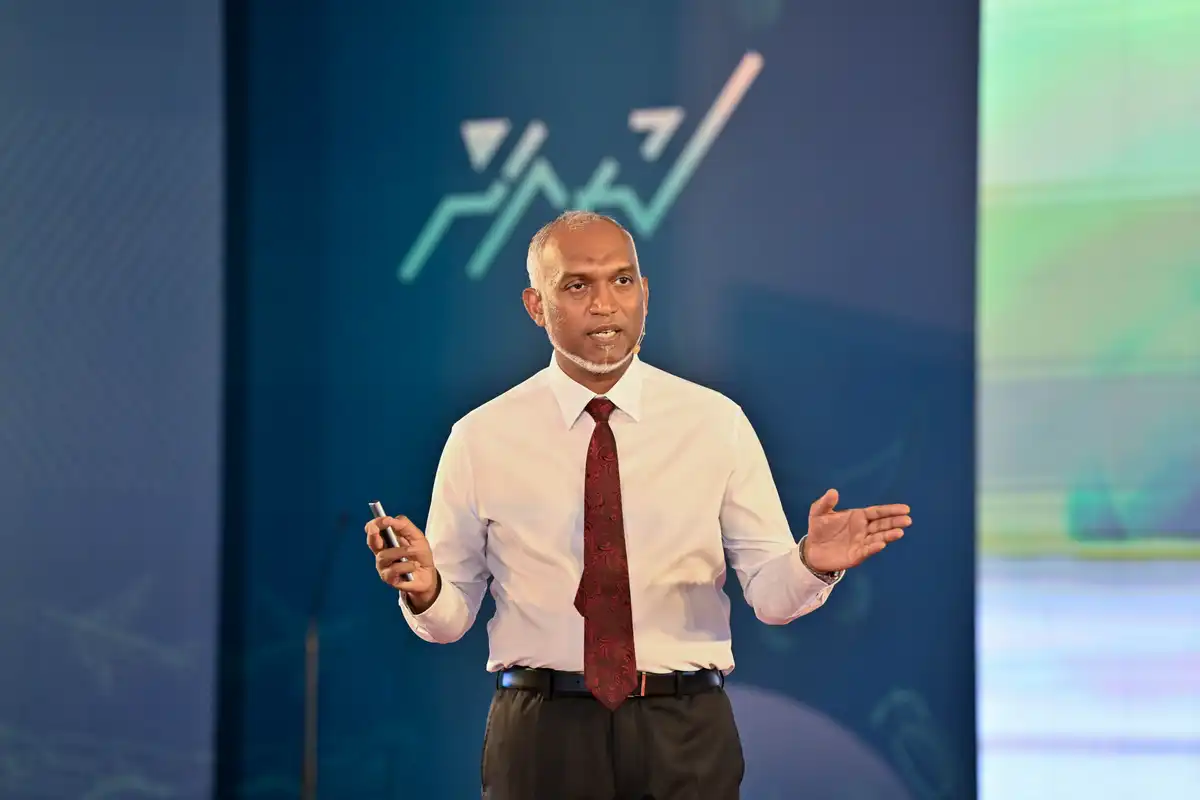
Speech by His Excellency President Dr. Mohamed Muizzu at the Ceremony Marking Week 104 of "Rayyithunnaa Eku Kuriah" (Forward with the People). | President's Office | Presidents Office
The current political climate serves as a grim reminder of the Maldives' historic referendum to choose between parliamentary and presidential systems. Back then, a vote was required to define the very structure of the supreme law during constitutional reform.
It was not a trivial task. Despite the Dhivehi Rayyithunge Party (DRP) and the Maldivian Democratic Party (MDP) holding opposing stances as the then-ruling party favoring a presidential model and the opposition advocating for a parliamentary one, the Special Majlis ensured the public wasn't left guessing.
The Elections Commission and the government were mandated to provide thorough education. Real debates happened, opponents shared stages and the government facilitated a process where citizens made informed choices based on actual substance.
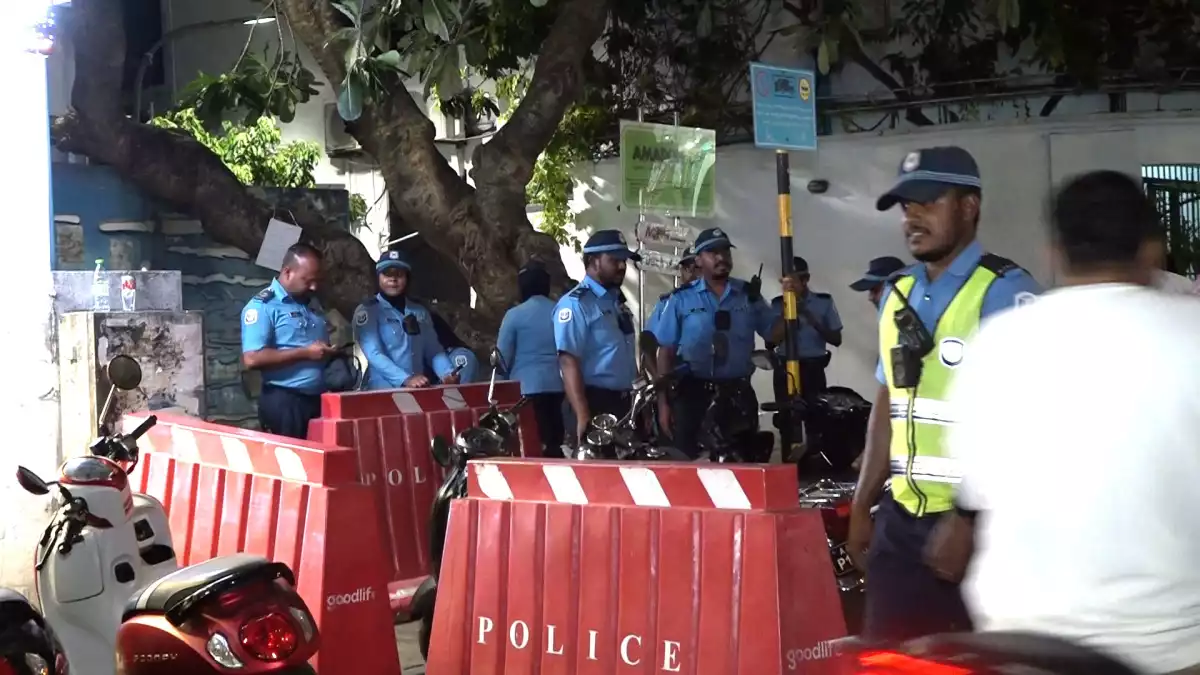
Fast forward to the present, where the contrast is deafening. On 4 April 2026, the public is being pushed toward another sensitive constitutional crossroads, born from a government-controlled People’s Majlis following a specific administration proposal; the goal being the synchronization of presidential and parliamentary elections, a move that requires slicing the five-year terms of a sitting Majlis assembly.
Unlike the transparency of 20 years ago, the incumbent has abandoned neutrality to shamelessly hunt for a specific result. The entire process has been shrouded in suspicion from day one. This massive constitutional shift was blindsided into the People’s Majlis during a recess via an extraordinary session, then sprinted through committees and floor votes in mere moments. Dubious private meetings between President Dr. Mohamed Muizzu and the Elections Commission (EC) chief have only darkened the clouds, especially since the main ruling People’s National Congress (PNC) felt emboldened to announce the election date before the commission itself bothered to.
Information for the average citizen is non-existent. EC has stayed silent on the "why" and "how" of this vote, while state media, funded by the very taxpayers it is supposed to inform, has morphed into a megaphone for the administration's agenda. To tilt the scales further, the government is busy distributing jobs, promotions and rearranging work environments, all while showering the country with promises of massive development projects. Simultaneously, the First Lady is on a marathon tour of the islands to secure the desired outcome.
While the state maneuvers, the people are left in a fog of uncertainty. The very legal experts and Special Majlis members who penned the Constitution are screaming into a void of unanswered questions. They warn that there is no roadmap for what happens once the dust settles from this vote. The government and the People’s Majlis that rubber-stamped this bill have offered nothing but silence in response to these glaring legal gaps.
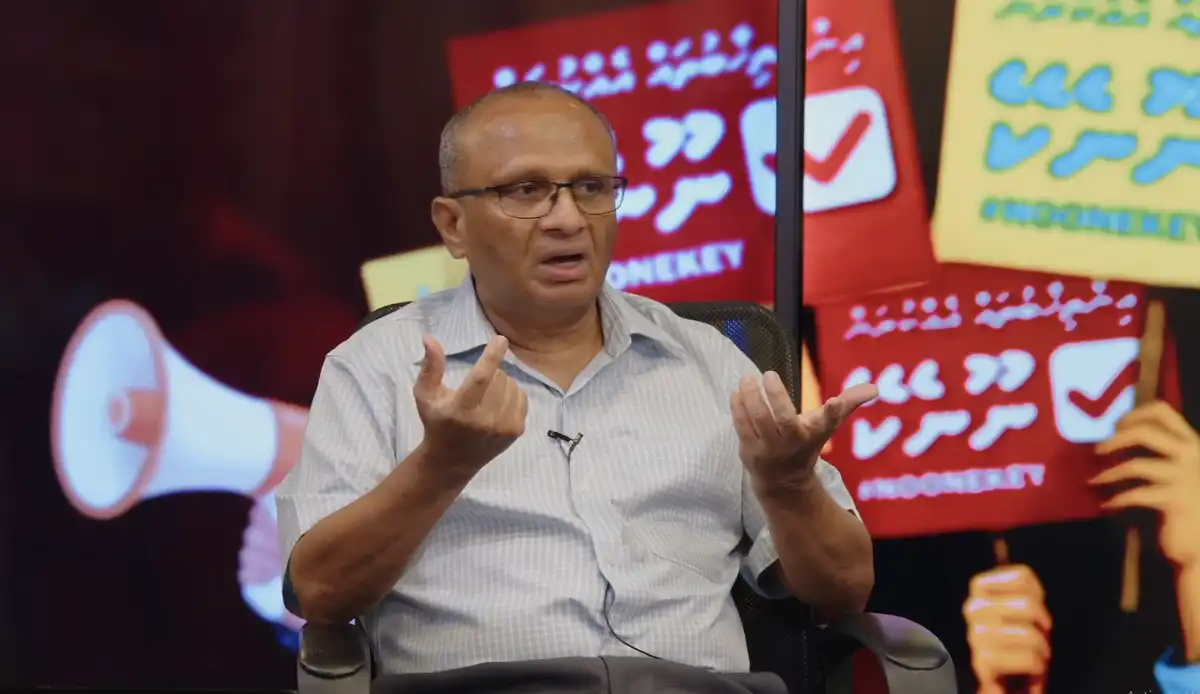
Ahmed Muizzu, the nation’s inaugural Prosecutor General and a former Special Majlis member, has flagged the referendum as a legal minefield. He argued that bypassing the public and failing to explain the consequences is a grave failure of representation. He has described the amendment as "defective" and "legally questionable," noting that the government is ignoring similar warnings issued by the Supreme Court in 2020. This lack of oversight during the drafting phase has left a flawed product that ignores essential legal remedies.
The academic and legal community is equally alarmed. Researcher Dr. Shamsul Falah views this 8th amendment as an assault on the basic structure of the Constitution itself. Former Attorney General Dr. Mohamed Munavvar characterizes the merging of elections as a move toward an autocratic mindset, arguing that keeping elections separate is vital for holding leaders accountable to the people.
Further criticism comes from former Supreme Court Justice Husnu Al Suood, who contends that lumping these elections together tramples on electoral rights. Separate mid-term parliamentary elections serve as a crucial performance review for the government; removing that window narrows the public's ability to demand accountability. He has warned that a combined election would allow the presidential race to swallow all resources, effectively erasing independent candidates and smaller parties from the map.
Ibrahim Ismail, the man who chaired the committee that drafted the current Constitution, pulls no punches, labeling the move a naked power grab disguised as constitutional reform. He dismisses the government’s excuse of "saving money," noting that democracy carries an inherent price that must be paid and the public shouldn't be the ones sacrificed for political gain.
Ultimately, the administration is forcing a seismic shift while keeping the public in a state of confusion. There has been no time for research, no explanation of the fallout and no clarity on future procedures. If this were truly a move made in good faith for the nation's benefit, the government wouldn't need to hide behind secrets or ignore the experts who built the system in the first place. The people are being asked to decide, but they are being asked to do it in the dark.