Lawyers respond to Judge Shaheed’s unusual inquiry: "Voters should not be required to read the entire bill; the ballot paper itself must provide clarity"
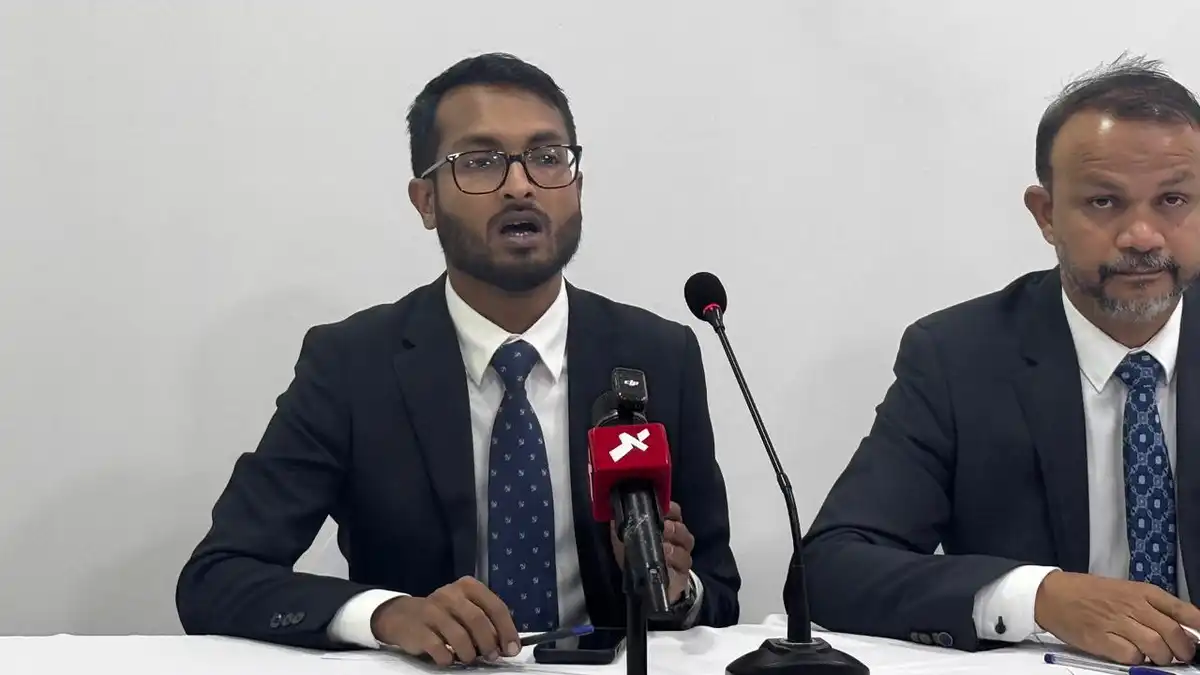
27 މާރިޗު 2026 | ހުކުރު 15:27Legal counsel argued that despite the bill being public, the referendum question must explicitly clarify to citizens that the proposed changes would reduce the current parliamentary term by six months. The lawyers emphasized that when seeking public consent for constitutional amendments affecting the term limits of Parliament, it is a legal necessity to ensure the implications are clearly stated on the ballot.

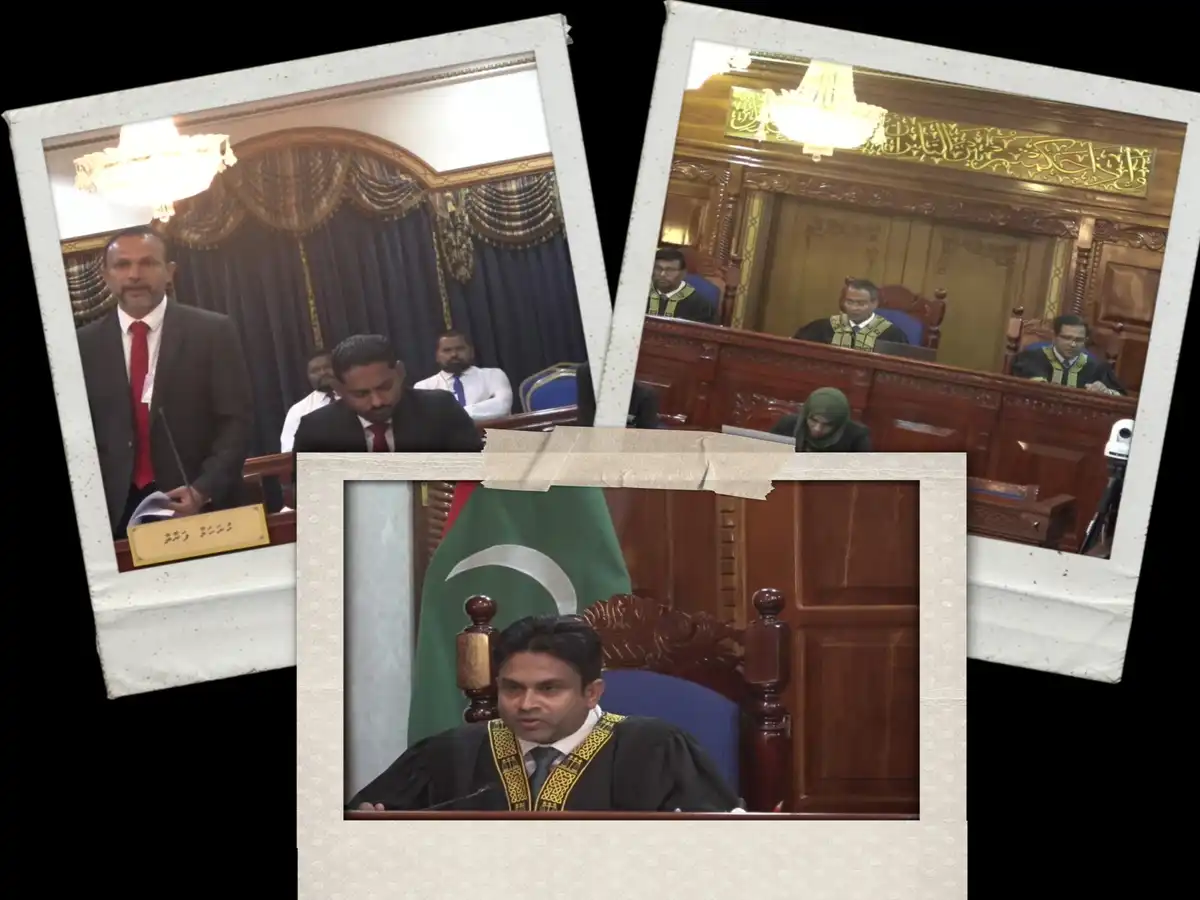
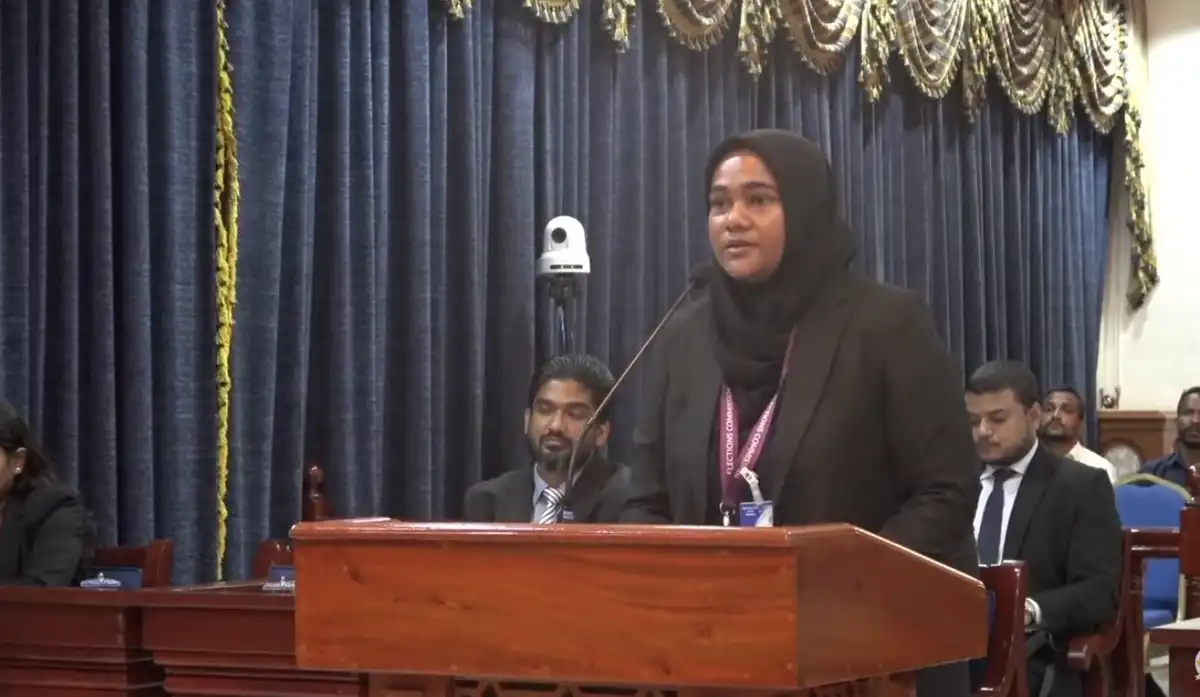
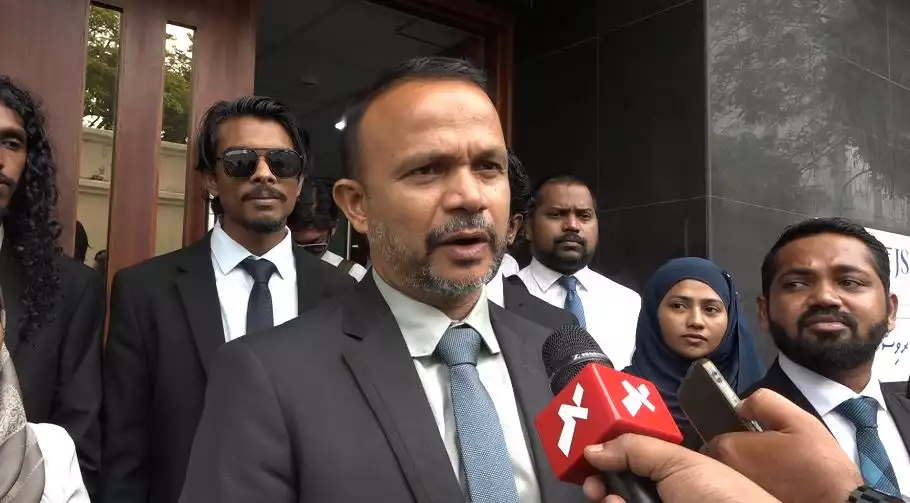
During the Supreme Court hearing held on Thursday regarding the petition seeking an injunction to halt the referendum. | RaajjeMV | Raajje MV
Supreme Court Justice Husain Shaheed has questioned whether the proposed constitutional amendment to hold presidential and parliamentary elections concurrently, and to revise the method for calculating parliamentary terms, is being treated as a "secret bill."
Justice Shaheed, who was recently appointed to the Supreme Court, raised this question regarding a bill that was passed by Parliament on February 10 and subsequently published on its official website.
Judge Shaheed raised this question during the preliminary hearing of a case seeking to invalidate the proposed referendum question on the 8th Amendment to the Constitution. The lawsuit contends that the phrasing of the question formulated for the public vote is unconstitutional.
During the court session held on Thursday morning, Justice Shaheed, who was recently appointed to the Supreme Court, directed this question to the petitioner's legal counsel, Ali Hussain.
If this is not a classified bill, and it concerns legislation that should be accessible to the public, what exactly is being kept secret here? What are you suggesting is actually being concealed?Supreme Court Justice Hussain Shaheed
When Ali Hussain responded in the negative to the judge's inquiry, the judge further questioned why the ballot question was being characterized as concealing the parliamentary term, especially since the bill itself is not a confidential document.
In response, Ali Hussain stated that the wording of the question on the ballot fails to clarify to the public that the current parliamentary term would be reduced by six months. He further noted that while the Constitution currently mandates a five-year term for Parliament, holding this vote alongside the local council elections could lead to unfavorable outcomes.
In response to this question, Ibrahim Shiyam, the lawyer who filed the case, stated that to understand the implications of the bill, citizens must do more than just read the text—they must perform the calculations. He explained that if the current parliamentary term is set to expire on December 1, 2028, the objective is to determine exactly how many months would be deducted from that term.
If the parliamentary elections are held ahead of the scheduled term expiry on December 1, 2028, the public will be forced to calculate the impact on the current parliamentary term themselves. Citizens should not be expected to scrutinize the details of the bill to understand the implications of its acceptance. The reason a referendum is required is that the actual duration of the People’s Majlis is being altered. When citizens head to the polls, they will not be carrying copies of the legislation with them. Furthermore, the ballot paper itself will not specify exactly how much of the current term is being truncated.The case was submitted by legal counsel Ibrahim Shiyam.
Shiyam noted that since Article 262 of the Constitution mandates public approval for any changes to the parliamentary term, the specific question posed to the citizens in a referendum must be clearly defined.
The primary argument presented by the legal counsel is that when the public is consulted, it must be explicitly stated that the current parliamentary term will be reduced by six months. Furthermore, the lawyers emphasized in court that the mere publication of the bill does not justify presenting an ambiguous question on the ballot paper.