Another promise made! Is it time to enter the tourism business now?
6 ފެބުރުއަރީ 2026 | ހުކުރު 17:53Tourism industry experts and opposition figures have criticized the presidential pledge to grant citizens ownership of 10 government-developed resorts, labeling the proposal as practically unfeasible. However, failing to address these concerns ultimately results in the general public bearing the brunt of the consequences.


President Dr. Mohamed Muizzu and First Lady Sajidha Mohamed pictured with several Indian celebrities during an event held in Mumbai to promote Maldivian tourism, as part of his official visit to India — October 9, 2024. | President's Office | President's Office
We have witnessed numerous initiatives proposed by this administration under the guise of boosting the tourism sector. These included efforts to promote the Maldives by bringing in international celebrities, as well as a high-profile marketing campaign in collaboration with Liverpool FC. Furthermore, significant changes were introduced to the nation’s foreign exchange policies. However, none of these measures have yielded any tangible benefits. On the contrary, these actions have only served to worsen the situation.
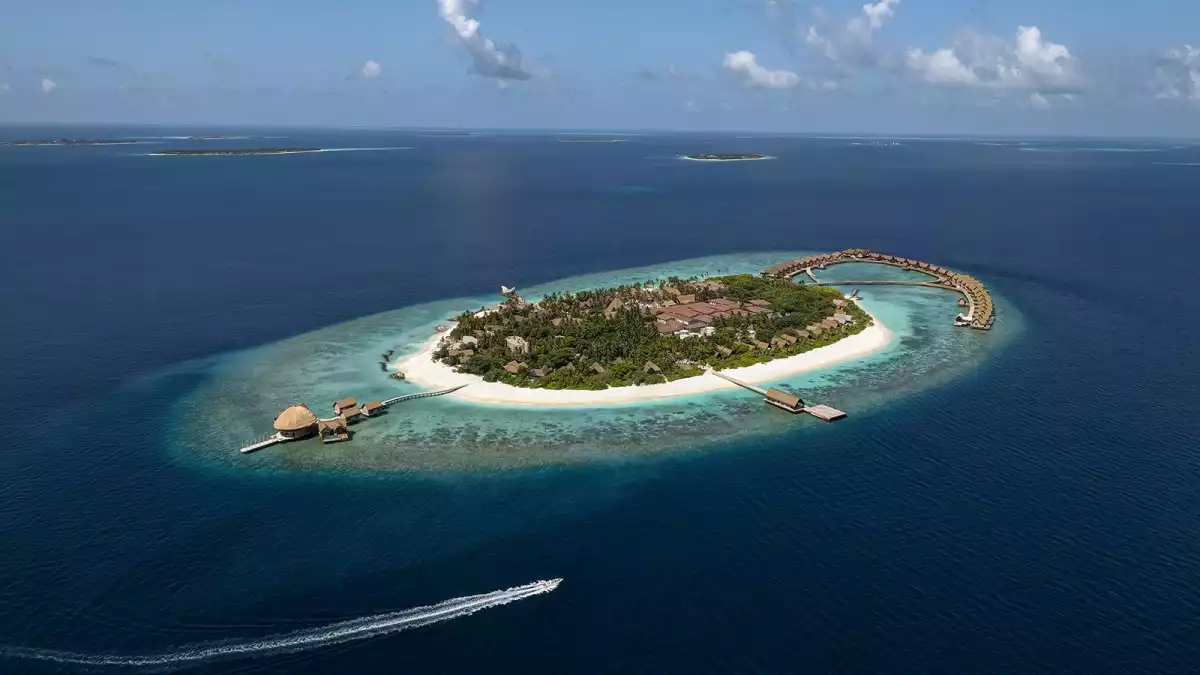
Despite the current situation, the Presidential Address was once again filled with grandiose rhetoric. Another promise has been made to this sector: the development of 10 luxury resorts, with ownership stakes purportedly to be granted to every Maldivian citizen. However, rather than inspiring hope, this claim has been widely dismissed as a joke.
Industry professionals in the tourism sector have dismissed the claims as hollow and incoherent rhetoric. In a post on 'X', former Vice President Faisal Naseem noted that with statistics projecting the Maldives' population to exceed 500,000 by 2030, there is no mathematical basis to suggest that 10 resorts could generate the $200 million in profit required to distribute $400 per capita.
Many long-standing experts in the tourism industry share Faisal’s perspective. This is because securing $800 million for 10 resorts remains a significant challenge. Currently, the government is struggling with a lack of funds even to service its existing debts. Projects have come to a standstill, and there are shortages of essential medicines. Financial constraints are cited as the excuse for every issue. Therefore, given the current track record, it is difficult to believe that funding for the development of luxury resorts can be secured as easily as claimed.
The next step appears to be the systematic dismantling of industries sustained by private initiative. The government now intends to involve itself in everything from cleaning services to the taxi business. Ultimately, they seem poised to cut open the golden goose by encroaching upon the tourism sector itself. However, it is crucial to examine what research, if any, informed such a significant decision. Otherwise, under the guise of fulfilling campaign promises, the risk of selling out and destabilizing this industry is a looming reality. When such actions are taken without due diligence, it is the ordinary citizen who ultimately bears the loss.