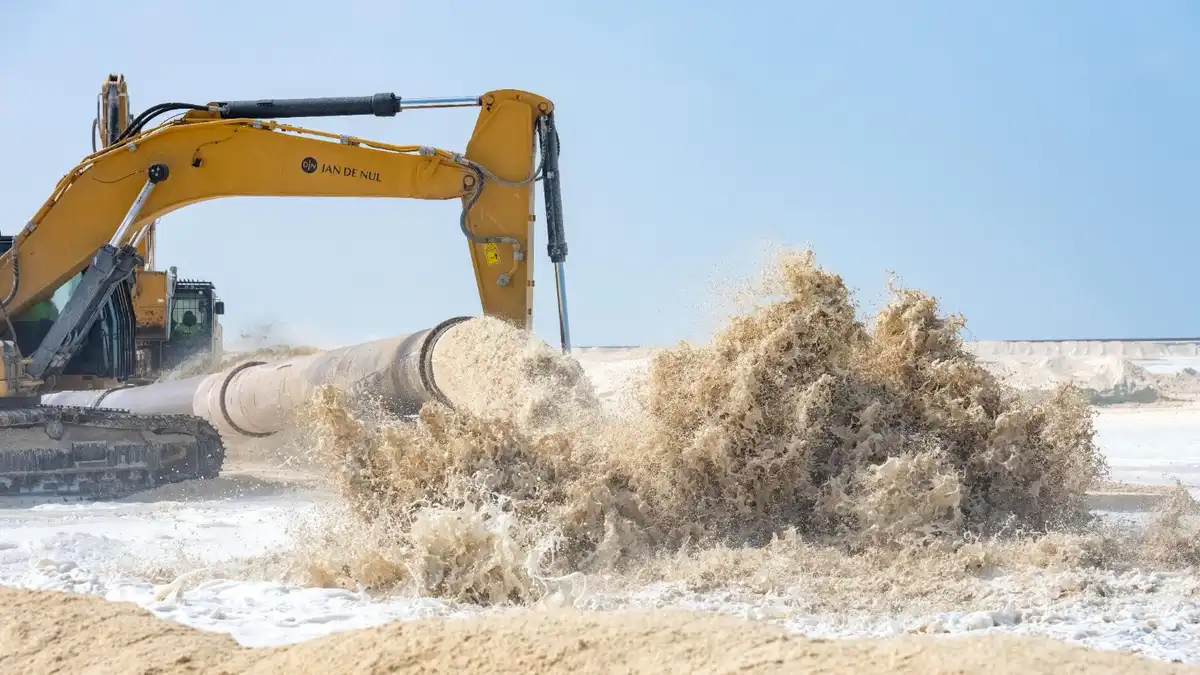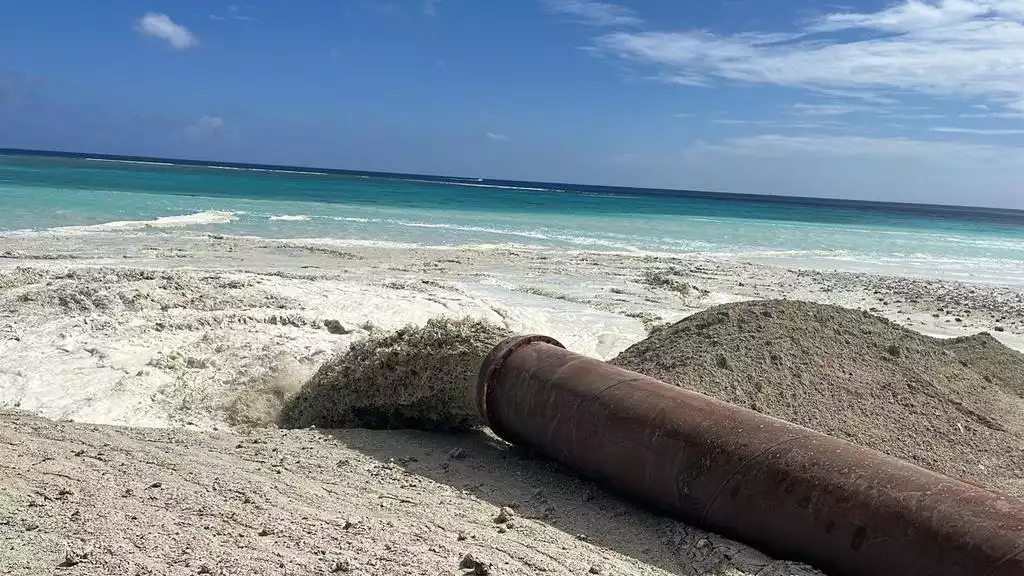
Environmental safeguards ignored as gov’t pushes secrecy-shrouded reclamation projects
26 ޖެނުއަރީ 2026 | ހޯމަ 04:25As the government continues to degrade critical ecosystems under the banner of opaque development projects, there remains no effective authority to oversee these actions or hold those responsible to account.

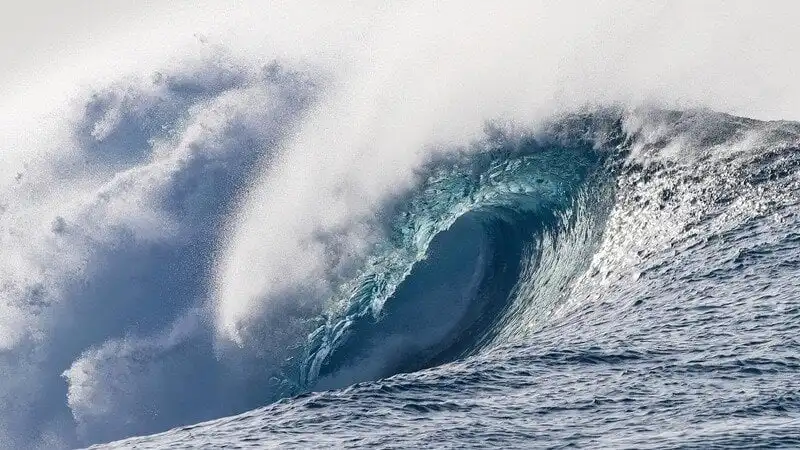
"Save Our Waves" is calling for urgent and responsible action to protect the surf break known as Tucky Joes (Miyaru Faru) in the Maldives. | change.org
The reclamation of Ras Malé began in direct defiance of a parliamentary resolution, passed by a significant majority, which advised the government to halt the project. At the time, President Dr. Mohamed Muizzu assured the public that not a single penny of state funds would be used for the reclamation. However, the justification behind the rushed initiation of the Fushidhiggaru Lagoon, more commonly known as the Ras Malé project, during the early days of the Muizzu administration remains questionable, particularly when numerous other reclamation projects in the Greater Malé Region (GMR) remain incomplete.
The reclamation of Ras Malé was launched without adequate environmental safeguards or comprehensive research. This is reflected in the fragmented manner in which Environmental Impact Assessment (EIA) reports were submitted. Although the stated target is to reclaim 1,150 hectares, the initial EIA reportedly covered only 29 hectares, followed by piecemeal submissions for subsequent phases. This fragmented approach highlights a clear absence of comprehensive planning and raises serious concerns about the integrity of the process. While EIA reports require project owners and contractors to mitigate environmental damage, there is no evidence that such measures have been implemented. Instead, the entire region is visibly affected by extensive sedimentation and pollution.
Article 22 of the Constitution obligates the state to protect and preserve the environment for present and future generations and to prevent harm resulting from development activities. Despite this constitutional mandate, the project has proceeded without transparency regarding mitigation measures or their effectiveness. In the past, similar projects were subject to regular monitoring, with the Environmental Protection Agency (EPA) ensuring that corrective actions were strictly enforced.
As unregulated reclamation of an open reef continues to cause severe sedimentation and environmental degradation, the Ministry of Environment and the Environmental Regulatory Authority (ERA) appear either complacent or deliberately indifferent.
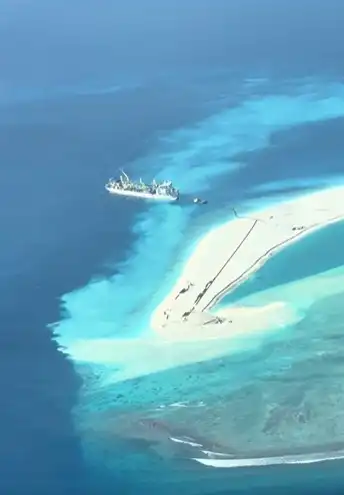
Ras Malé reclamation: Aerial video footage shows wide spread of sediments in the entire area - 4 December 2025.
The environmental damage caused by the Ras Malé project extends beyond sedimentation. Due to the absence of proper environmental studies prior to the hurried commencement of reclamation, significant alterations have occurred in local currents and wave patterns. As a result, Tucky Joes, also known as “Miyaru Faru” and regarded as one of Maldives’ most iconic surf breaks, now faces the risk of extinction. Surfers, tourist guides and divers have expressed their concerns through sea protests and online petitions, yet the government has remained unresponsive.
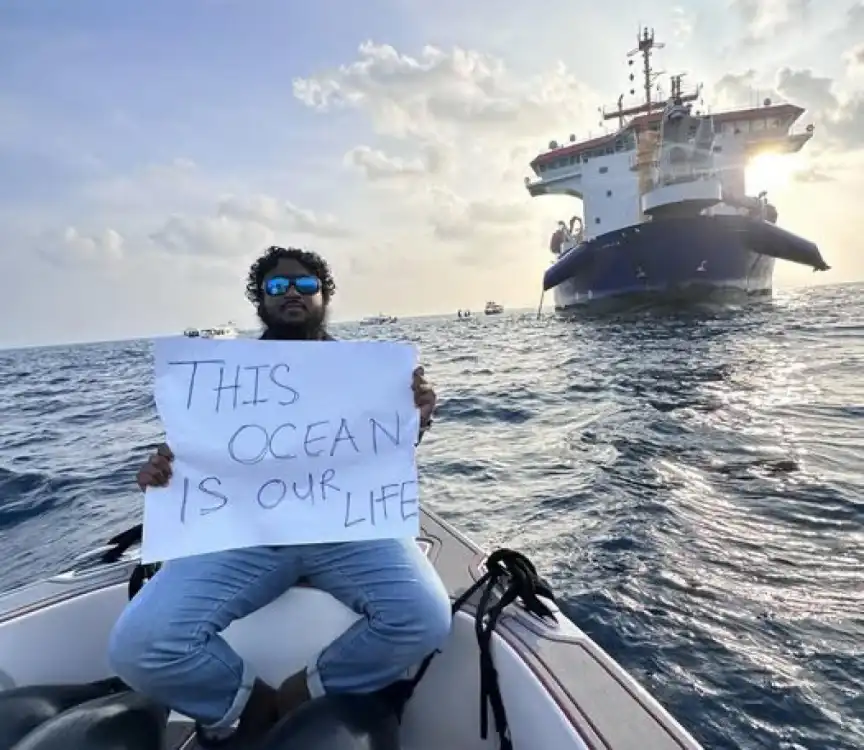
Protest near the dredger engaged in Ras Malé project over dredging near islands for the reclamation on 26 December 2025.
While the government frequently invokes nationalism and has even established a dedicated ministry while engaging in repeated rhetoric about national identity, it appears to disregard the fact that the Maldives’ unique natural environment lies at the heart of that identity. Endangering a site as significant as Tucky Joes amounts to the permanent erasure of an irreplaceable part of the nation’s heritage.
Experts have stated that Tucky Joes is being destroyed as a result of land reclamation that has altered the lagoon and disrupted the currents required for wave formation. With no existing mechanism to hold the government accountable, the concerns of the surfing and diving communities continue to go unheard.
Local non-governmental organization ‘Save Our Waves’ has called for urgent and responsible action to protect the Tucky Joes surf break. However, there is little optimism within the current governance framework. These waves are not merely recreational assets for tourists and surfers; they are an integral component of a living ecosystem of reefs and lagoons. They also serve as a natural defense against climate change and are essential to the sustainability of the tourism industry, which underpins the Maldivian economy.
The government is rapidly reclaiming vast areas such as Fushidhiggaru Lagoon using the world’s largest dredgers, citing the need to address the housing crisis. These projects are financed using foreign currency generated through tourism. Tourists are drawn to the Maldives for its pristine reefs, lagoons and distinctive natural environments. Destroying these assets while promoting the narrative of sustainable development is inherently contradictory.
Major reclamation projects are being rushed for short-term political advantage with little regard for long-term consequences. Although the Ras Malé project is marketed as an eco-city, the reality is a development driven by large-scale environmental destruction.
Beyond environmental impacts, the Ras Malé project is also marked by secrecy. Despite assurances from the president that the state would bear no costs, subsequent revelations suggest otherwise. The initial agreement with the Sri Lankan company Capital Marine and Civil Construction Company was opaque. Following the termination of that contract, the project was transferred to the Chinese firm China Railway Construction Corporation under similarly unclear terms. The total cost of the project and the contractor selection process remain undisclosed. Despite the involvement of public funds, nearly all aspects of the project have been kept hidden from public scrutiny.
While Maldivians value modern amenities and development, tourism remains the backbone of the national economy. Without this sector, the Maldivian way of life would be severely undermined. By destroying the very natural assets that attract visitors, the government places the country’s future at serious risk.
Through actions that bypass the law, lack foresight and prioritize power over policy, the government is failing to uphold environmental protection and sustainable development. These opaque projects are not only destroying invaluable natural resources such as reefs and surf breaks, but are also pouring an undisclosed amount of foreign currency into irreversible environmental loss.