From denial to deflection: how the gov’t shifted blame for student allowance delays
22 ޖެނުއަރީ 2026 | ބުރާސްފަތި 13:29Over 2,000 Maldivian students face severe hardship abroad due to persistent delays in government scholarship and loan disbursements two years into President Muizzu's administration. Despite students raising concerns directly with the president and ministers, the government has shifted blame onto students themselves, claiming issues stem from incomplete information and their own mistakes.

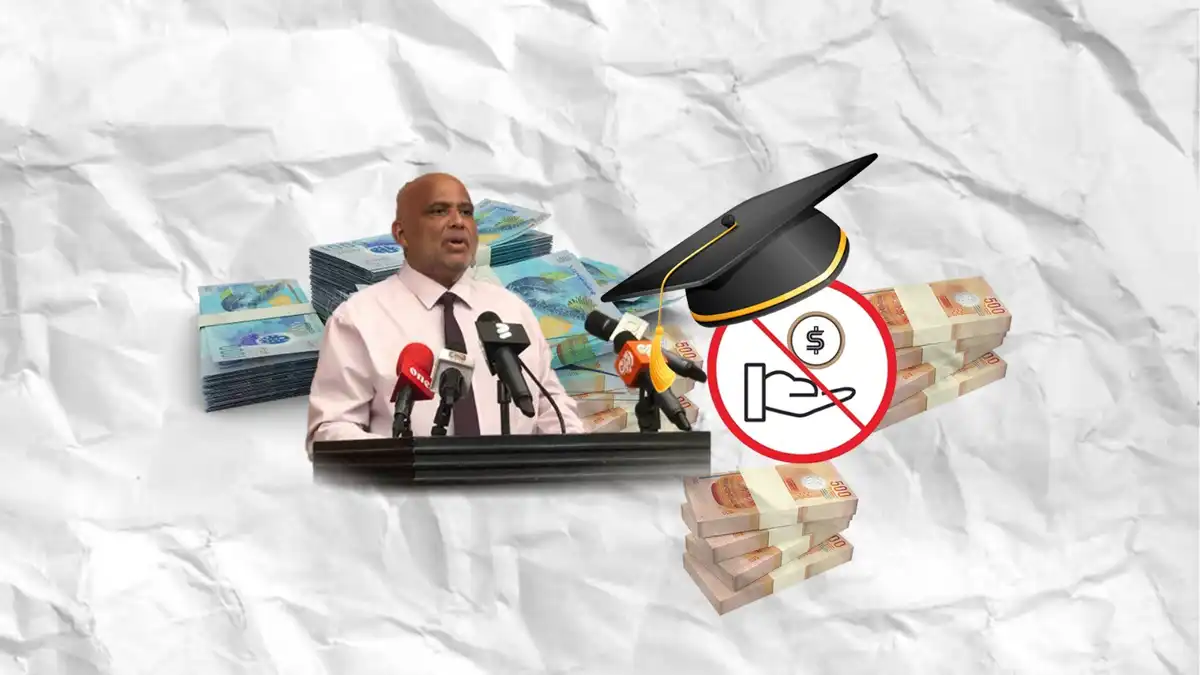
Minister of Higher Education, Dr. Ali Haidar, stated that the delays in disbursing funds to the students are attributable to the students themselves. | Raajje MV
According to statistics from the higher education ministry, 1,740 students are currently pursuing their studies in the Maldives and in 36 foreign countries under government-funded student loan schemes. In addition to this, 602 students are enrolled in scholarship programs across 20 different countries. These more than 2,000 students depend primarily on the financial support committed by the government to meet both their academic costs and their basic living expenses.
Two years into President Dr. Mohamed Muizzu’s administration, numerous complaints have emerged regarding persistent delays in the disbursement of funds to students studying abroad under government loans and scholarships. The failure to release these funds has placed many Maldivian students in severe and precarious situations in foreign countries. Despite the seriousness and duration of the problem, no government ministry has, to date, meaningfully addressed these concerns.
Students have raised the issue directly with government ministers as well as with President Muizzu himself. During the president’s visit to the United Kingdom in 2025, undertaken to visit his daughter and attend a Liverpool match, students personally conveyed their grievances to him. On that occasion, President Muizzu acknowledged negligence on the part of the government and assured students that the administration would take steps to resolve the matter.
In April 2025, Minister of Higher Education, Labour and Skills Development Dr. Ali Haidar, informed the People’s Majlis that delays in fund disbursement and slow responses to student inquiries were the result of the government issuing more student loans than originally planned. On the same day, the minister also stated that the delays were caused by students submitting incomplete information and by problems related to their bank account details.
As the situation continued without resolution, some students once again brought their concerns to the media and shared their experiences on social media platforms in late 2025. This action was met with clear disapproval from the Muizzu administration. On 24 December 2024, during a phone interview on RaajjeTV’s morning talk show “Fashaairu”, Minister Haidar was asked whether the ministry had received any complaints regarding unpaid student funds. He claimed that no such complaints had been lodged. He also expressed dissatisfaction with students speaking to the media, stating that contacting RaajjeTV would not solve their financial problems.
The year 2025 ended without a satisfactory resolution, while the government’s explanations continued to shift. The administration’s approach to the issue reflects an apparent lack of genuine concern for the affected students. Despite the long-standing nature of the problem, Minister Haidar, who has yet to present a solution, stated in early 2026 that delays in payments to students abroad were the fault of the students themselves. This issue is not new, and had the government acted sincerely, it would have had ample time to resolve it rather than transferring blame onto students who are already facing significant hardship.
In response to these challenges, MP for North Galolhu constituency Mohamed “Kudoo” Ibrahim, submitted a special report on higher education last year. The matter was taken up in the parliament, where the minister was summoned and questioned. However, despite students having personally raised their concerns with President Muizzu, the government has continued to evade responsibility by attributing systemic failures to the students.
Two years into this administration, a consistent pattern of deflecting responsibility has become evident. Development projects in the islands are described as stalled due to local councils; students are said to miss their monthly allowances because of their own mistakes; shortages of medication are blamed on so-called medicine mafias; and the government’s inability to stabilize the dollar is attributed to the black market.
Within this narrative, the government is presented as blameless, while accountability is placed on everyone else. This appears to be the standard of responsibility and governance that the public can expect from the current administration.