
Hazardous haze triggers red alert as HPA issues health warning
7 ޖެނުއަރީ 2026 | ބުދަ 17:39HPA has issued warnings as severe haze is expected to persist nationwide for five days, with visibility dropping below 1.5 kilometers and air quality reaching hazardous levels in central and northern regions. Authorities advise limiting outdoor activities, wearing N95 masks when necessary, and keeping windows closed while using air purifiers indoors. The haze originates from the Indian subcontinent and Himalayan region during the northeast monsoon season.

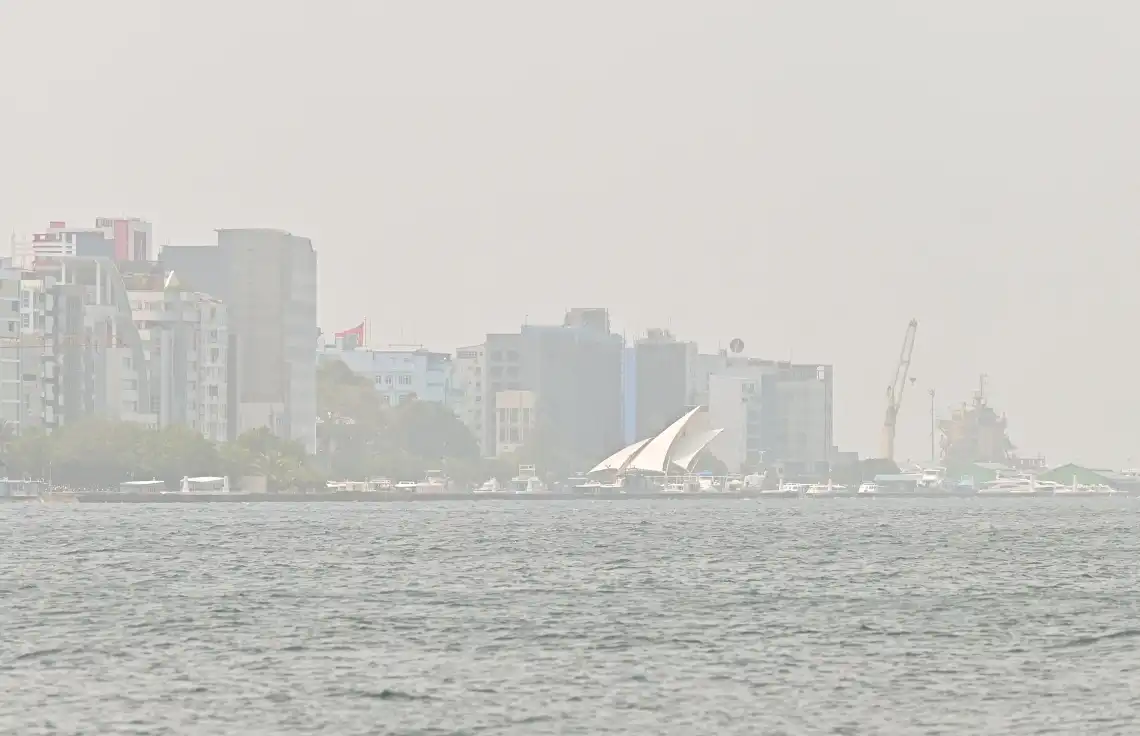
MMS says the air quality across the Maldives' region is expected to remain significantly poor over the next five days | Mihaaru
The Health Protection Agency (HPA) has urged the public to take precautionary measures as multiple regions across the Maldives continue to experience severe haze.
The agency stated that elevated haze levels are expected to persist nationwide for the next five days.
During this period, the public health authority has advised the public to limit outdoor sports and physical activities.
When going outdoors cannot be avoided, the agency recommends the use of N95 masks or other suitable protective face coverings.
Air quality across the Maldives has deteriorated significantly, resulting in a marked reduction in visibility.
According to the Maldives Meteorological Service (MMS), visibility fell below 1.5 kilometers on Wednesday.
As a result, air quality in the central and northern regions has reached hazardous levels, prompting the issuance of a red alert.
The weather department further indicated that air pollution is likely to remain at dangerous levels over the coming five days.
HPA warned that these conditions pose serious health risks, particularly to individuals suffering from respiratory illnesses or heart disease.
To reduce exposure to polluted air indoors, HPA has advised residents to keep windows and doors closed and recommended the use of air purifiers to improve indoor air quality.
The agency also called for heightened caution for children and pregnant women if they need to go outside.
The decline in air quality has been attributed to haze drifting from the Indian subcontinent and the Himalayan region during the northeast monsoon, a phenomenon that has become a recurring annual occurrence in the Maldives during this season.

