SIDS continue to be “disproportionately affected” by climate change: Maldives
28 ސެޕްޓެމްބަރު 2019 | ހޮނިހިރު 08:35The president said this at the high-level meeting to review progress made on the SAMOA Pathway, on Friday
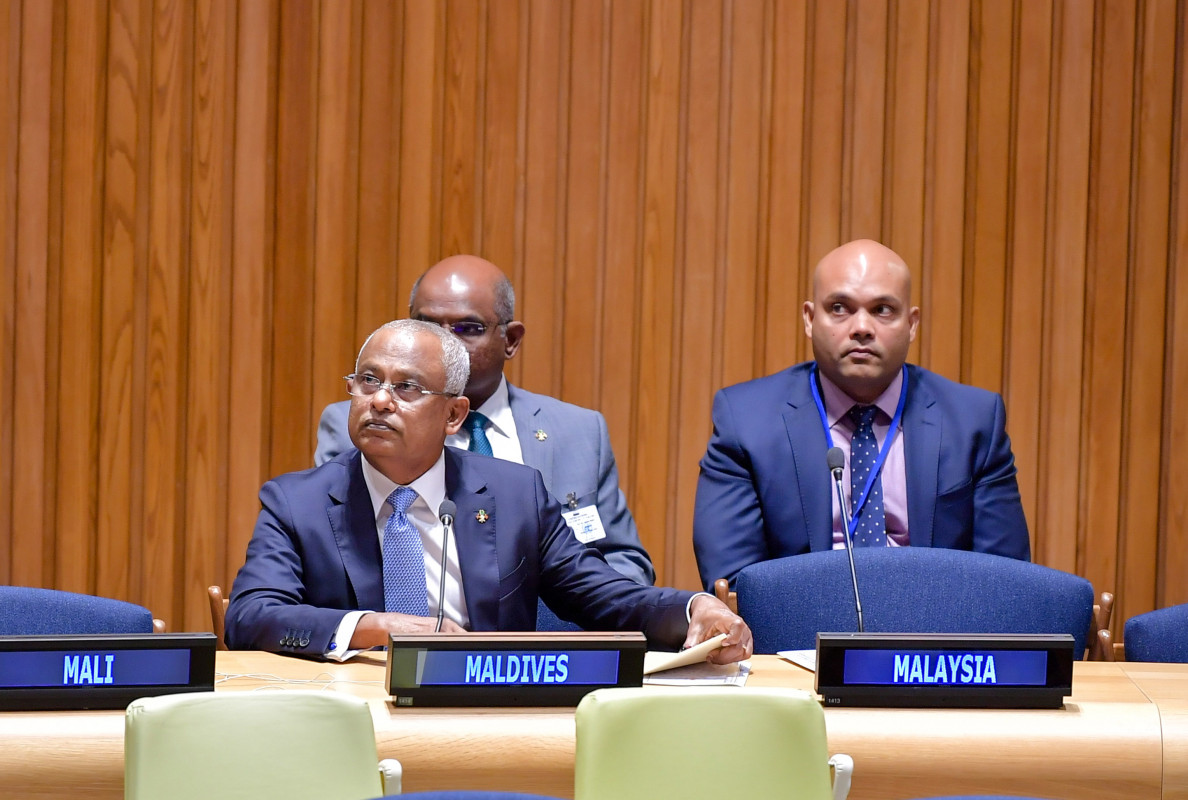
President Ibrahim Mohamed Solih leads the Maldives delegation | Presidents Office
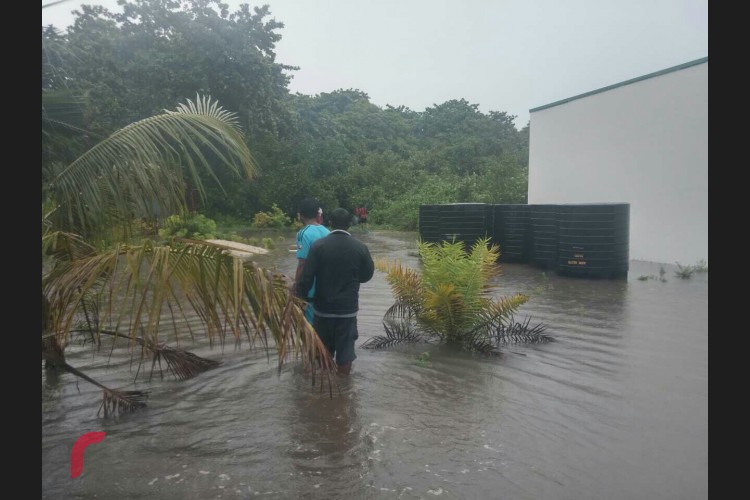
Small Island Developing States (SIDS) continue to be “disproportionately affected” by the adverse impacts of climate change, says President Ibrahim Mohamed Solih.
He said this during a statement given at the high-level mid-term review of the SIDS Accelerated Modalities of Action (SAMOA) Pathway multi-stakeholder “Roundtable I: Progress, Gaps and Challenges,” at the 74th United Nations General Assembly in New York on Friday.
Noting that SIDS “cannot graduate from small island status, or the unique circumstances that it encompasses,” Solih said that the SIDS limited resources, geographic dispersion and fragile ecosystems or vulnerability to external economic and environmental shocks “will continue to pose threats to development.”
He further added that the benefits of investing in essential public needs of SIDS “will manifest in greater opportunities, and substantial returns in the long-term opportunities that will arise from peace, stability, and prosperity.”
Also at the meeting, President Solih noted that mid-term review of the SAMOA Pathway is the midpoint of a journey on which the world embarked in 2014; which envisions a sustainable and prosperous future for all SIDS in the face of unprecedented challenges due to the inherent characteristics that form the collective SIDS identity.
President Solih also called for SIDS’ partners and the international community to deliver on the commitments already made in the SAMOA Pathway.