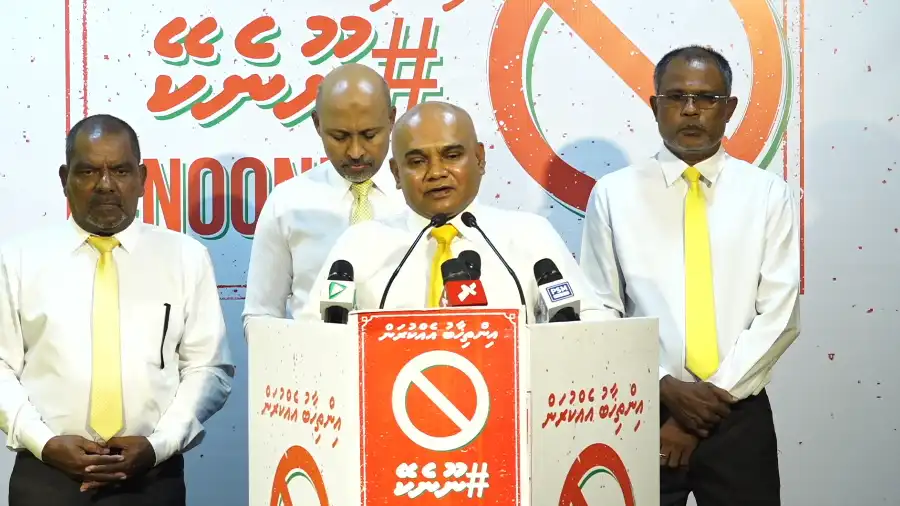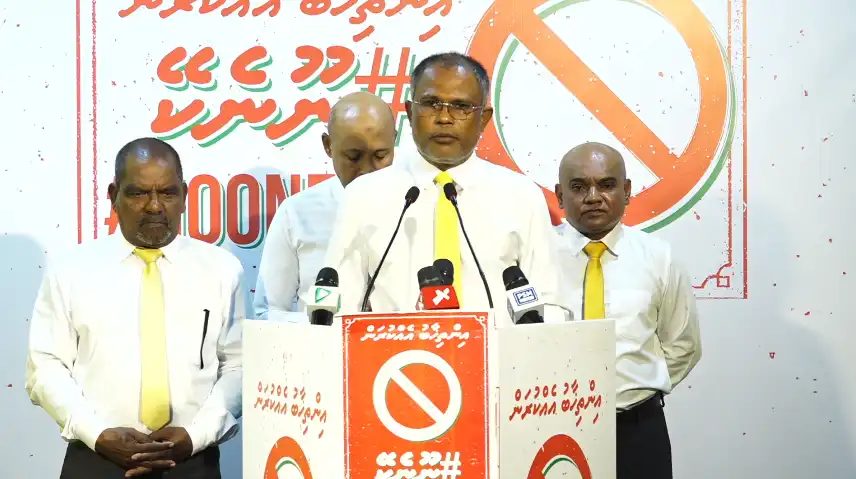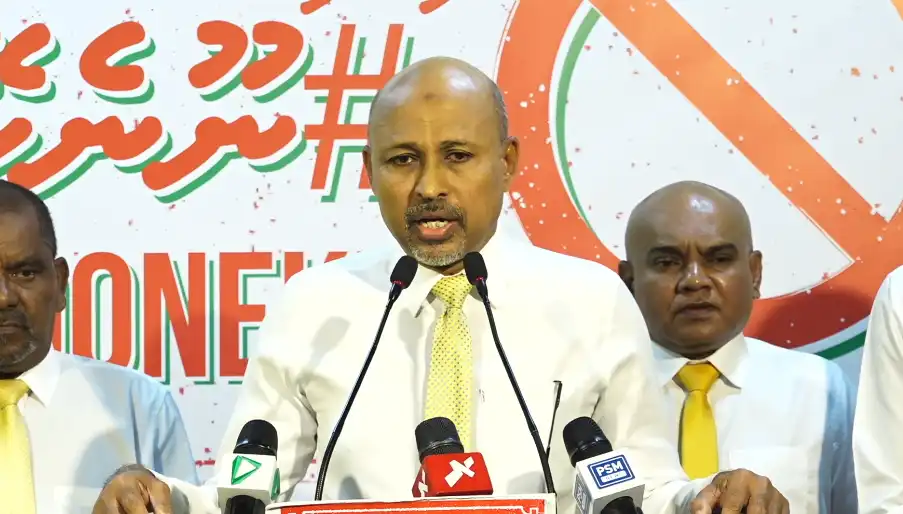
Future implications of legal amendments remain uncertain; opposition stems from resulting ambiguities: lawyer Mahfooz
31 މާރިޗު 2026 | އަންގާރަ 08:53Legal expert Mahfooz Saeed has criticized the proposed constitutional amendment to hold presidential and parliamentary elections simultaneously, describing it as a flawed and rushed piece of legislation. He urged the public to reject the change, warning that the lack of detail regarding exceptional circumstances would lead to legal ambiguities and noted that the phrasing of the referendum question is likely to mislead voters.


Attorney Mahfooz Saeed. | RaajjeMV | Raajje MV
Legal expert Mahfooz Saeed has stated that the consequences of President Dr. Mohamed Muizzu ratifying the bill to synchronize two elections remain unclear. He argued that while legislative amendments are intended to improve existing frameworks, they should not be pursued if they lead to further confusion. Consequently, he asserted that the public should vote "no" in the referendum.
Speaking on RaajjeTV’s "Noonekey" program, Mahfooz stated that the bill passed by the People’s Majlis to synchronize two elections is flawed. He characterized the legislation as a rushed effort, noting that no one can predict the potential consequences once the bill is ratified.
The justifications provided for the necessity of this bill fail to present a compelling argument. There are numerous lingering questions regarding the rationale being offered. The Constitution explicitly stipulates a specific date, stating that this process must be completed by December 1st. However, it remains unclear what the consequences are if this deadline is not met. What happens if the two elections cannot be held simultaneously? No details or legal remedies have been provided to address such exceptional circumstances.Attorney Mahfooz Saeed
Mahfooz stated that any amendment proposed to a law or the Constitution should aim to improve existing processes or bring about progress. However, he emphasized that if an amendment leads to confusion or ambiguity, it is not something that should be permitted.
Mahfooz stated that the question posed to the public on polling day should be whether they approve the ratification of the bill. However, he noted that the current phrasing of the question is too vague and indirect. He emphasized that the wording must be explicit, clearly reflecting the specific constitutional amendments being proposed within the text of the question itself.
Mahloof stated that these actions clearly illustrate an attempt to deceive the public, which is why it is essential to vote "no" in the referendum.