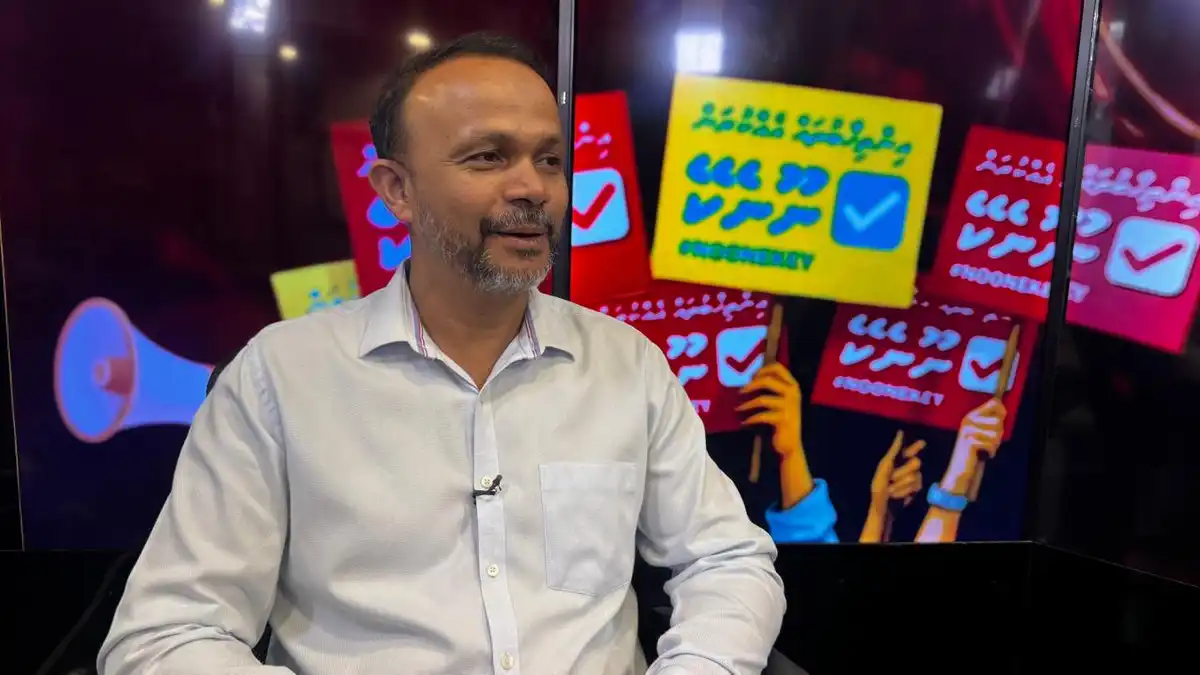
Combining two elections saves only five laari per person; this is a move by politicians to avoid facing the public twice: Ahmed Mohamed
27 މާރިޗު 2026 | ހުކުރު 15:31Economic expert Ahmed Mohamed has refuted the government's claims that merging presidential and parliamentary elections would significantly reduce costs, asserting that the change would only save approximately five laari per citizen annually. He highlighted that the consolidation primarily benefits political parties seeking to minimize campaign expenditures rather than the general public, suggesting the move is driven by political interests rather than genuine economic necessity.

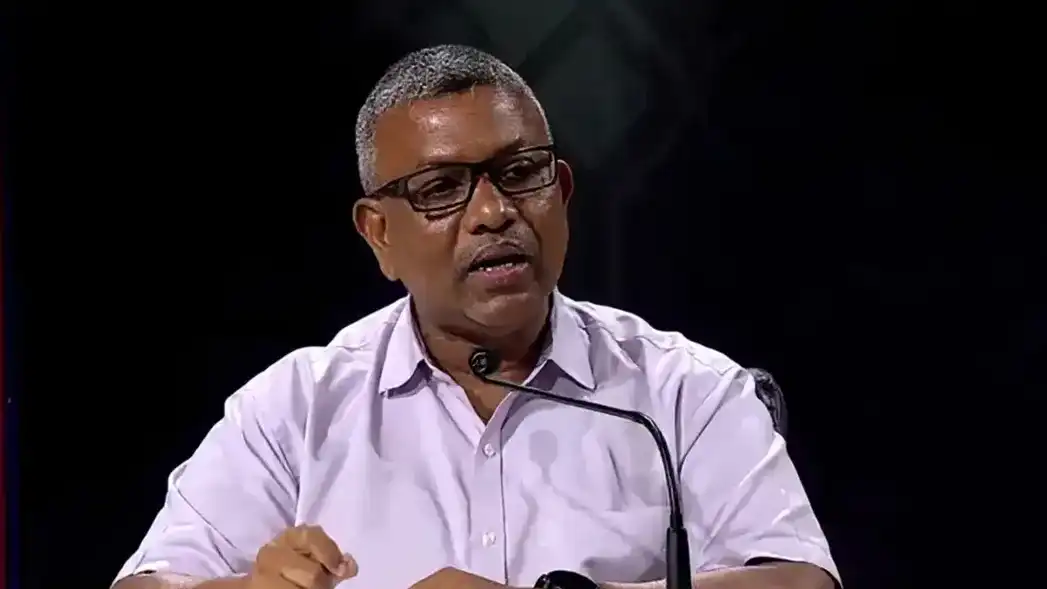
Ahmed Mohamed, an economic expert who has previously served as a cabinet minister and ambassador. | RaajjeMV | Raajje MV
Former Minister and economic expert Ahmed Mohamed has stated that holding presidential and parliamentary elections simultaneously would only save approximately five laari per citizen annually. He suggested that this move is a tactic by politicians to avoid facing the electorate twice.
Ahmed Mohamed noted that while the government claims the decision to consolidate the two elections is due to high costs, the actual figures suggest a different story. By the conclusion of both rounds of the 2023 presidential election, the total expenditure amounted to 85 million Rufiyaa. Meanwhile, the 2024 parliamentary elections cost approximately 60 million Rufiyaa. In total, the combined expenditure for these two separate elections reached 147 million Rufiyaa.
He noted that this amount represents less than half a percent of the projected 2026 budget. When calculated per capita, the cost amounts to 367 Rufiyaa per person. If the expenses for these two elections are distributed over a five-year period, the annual cost per citizen is 74 Rufiyaa. When broken down further, this equates to a daily expenditure of just 20 Laari per person.
Are we struggling to breathe over a mere 20 laari? The most significant expenses in conducting an election are administrative arrangements and the procurement of administrative supplies, which account for 72 percent of the election budget. The next largest expenditure is the 17 percent allocated for the salaries and wages of election officials. Combined, these two areas consume 89 percent of the total election cost. Even if two elections are held simultaneously, the number of staff required does not decrease, nor do the administrative requirements. Therefore, the costs of one election are not entirely eliminated by merging them. This practice exists in other parts of the world; among small island nations, Seychelles has combined its elections. Research and available data indicate that when elections are held together, the savings amount to only one-quarter of the total combined cost. One-quarter of 147 million is approximately 40 million Rufiyaa.Ahmed Mohamed
He noted that combining the two elections would not lead to a reduction in staff or administrative arrangements. Therefore, he explained, the costs associated with one election would not be entirely eliminated. He further stated that while some small island nations have synchronized their elections, research indicates that such a move only reduces the total expenditure of two separate elections by approximately one-fourth.
One-quarter of 147 million is approximately 40 million Rufiyaa. When distributed over five years, this amounts to just 8 million Rufiyaa per year. He noted that if calculated per capita, the actual savings for each Maldivian citizen would be a mere 5 Laari.
If spread over five years, this amounts to just 8 million Rufiyaa per year. When calculated per capita, the savings for each Maldivian citizen come down to a mere 5 laari. Is this 5 laari what we are so concerned about? We must consider the complications and confusion we are inviting for the sake of such a negligible amount. Therefore, the claim that this will result in significant economic savings is an absolute fabrication. The figures clearly prove otherwise.Ahmed Mohamed
He stated that consolidating the two elections does not benefit the Maldivian people, but rather serves the interests of politicians. He noted that by merging the elections, politicians would benefit from avoiding the double expenditure typically required when engaging with the public across two separate occasions.
He noted that all but two of the active political parties in the Maldives currently support this move. He further highlighted that these parties stand to benefit from the cost reductions associated with approaching the electorate once every five years, rather than twice.