Supreme Court petition filed: Referendum question allegedly conceals move to shorten parliamentary term from the public!
17 މާރިޗު 2026 | އަންގާރަ 10:09The referendum question asks whether the 8th Amendment to the Constitution should be ratified, yet it incorporates numerous details unrelated to the specific matters requiring public consent. As currently phrased, the question fails to provide clarity on the exact subject of the vote or its potential legal implications for the citizens.

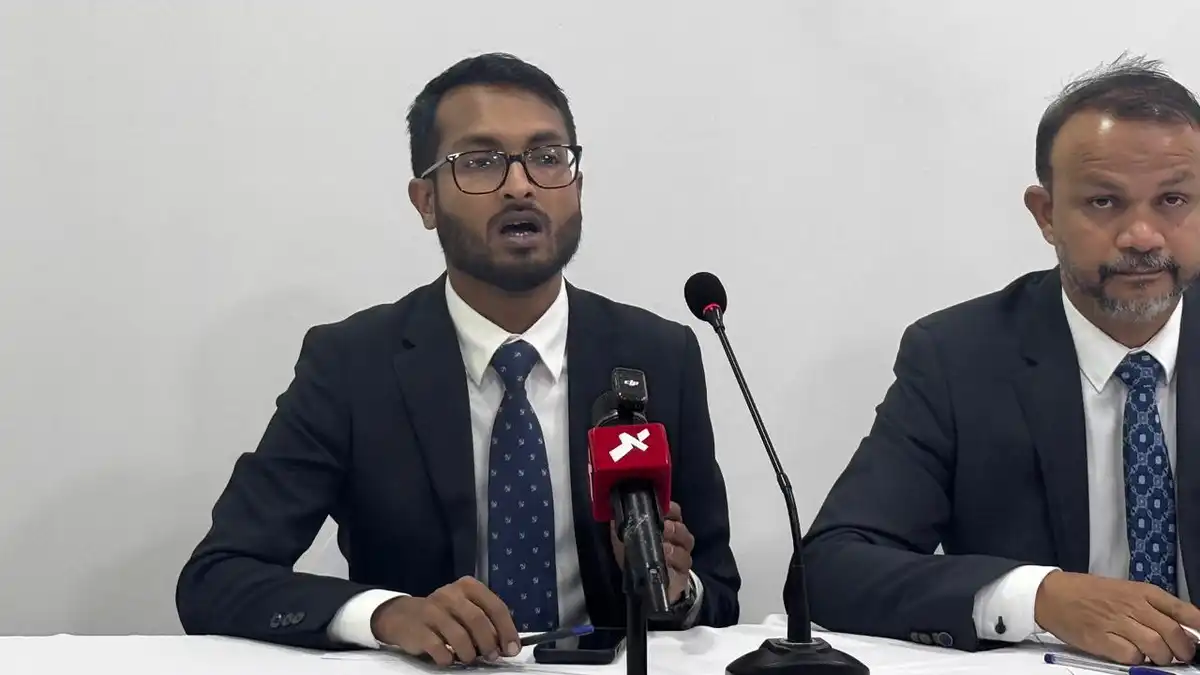
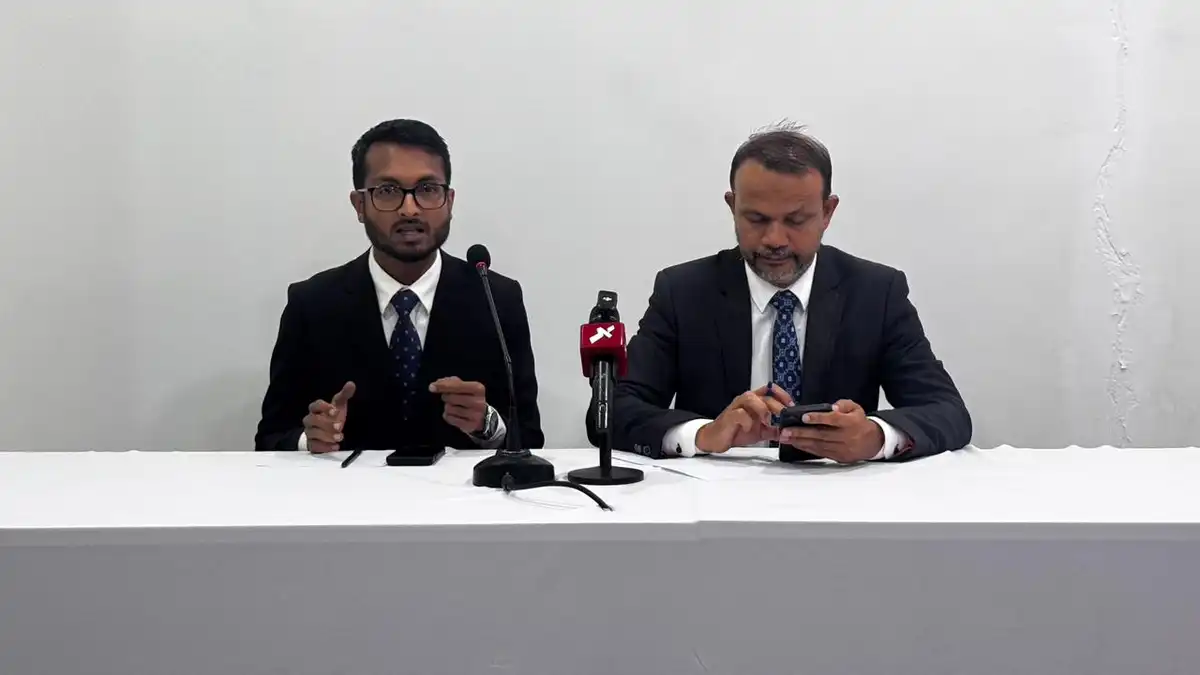
Attorneys-at-Law Aik Ahmed Easa and Ali Hussain. | RaajjeMV | Raajje MV
A legal challenge has been filed with the Supreme Court alleging that the wording of the referendum question on holding presidential and parliamentary elections concurrently obscures the fact that it would involve shortening the term of the current Parliament.
With two cases regarding the referendum vote currently filed at the Supreme Court, legal counsel Aik Ahmed Easa provided details on the first matter, noting that it was submitted by himself and lawyer Ibrahim Shiyam. He highlighted that the case was filed in response to the government’s attempts to hold a referendum based on its own discretion, despite the move involving significant legal complexities.
He stated that the case filed with the Supreme Court concerns the specific phrasing of the referendum question. Aik noted that the question is framed in a manner that contradicts the spirit of the Constitution, arguing that its wording is misleading regarding the potential outcome.
Aik stated that the referendum question asks whether the 8th Amendment to the Constitution should be ratified, noting that the amendment includes numerous details unrelated to matters that legally require a public vote. He further argued that the question should instead focus on the core issue: whether the public consents to shortening the current parliamentary term.
This matter could have been resolved without being submitted [to court]. We were compelled to file this case due to the incompetence of those responsible within the government and state institutions. This could have been executed in a manner that does not conflict with the Constitution; however, they continue to deceive the public for political gain.Attorney Aik Ahmed Eisa
He stated that the current phrasing of the question fails to clarify what the public is voting for or what the potential outcome would be, adding that this ambiguity could lead to significant negative consequences for the nation.