
Debris washed ashore in Laamu Atoll identified as parts of a rocket launched by India last year.
15 ފެބުރުއަރީ 2026 | އާދީއްތަ 12:11A large piece of debris from a rocket bearing the Indian Space Research Organisation (ISRO) logo has washed up on an uninhabited island near L. Kunahandhoo. Discovered by local fishermen, the components are believed to be "payload fairings" used to protect satellites during launch. While the Maldives Police Service and the Maldives National Defence Force are currently investigating the matter, ISRO has yet to issue an official statement regarding the discovery.

The LVM3-M6 mission was launched on December 24, 2025. | ISRO | ISRO
The Indian Space Research Organisation (ISRO) has confirmed that debris from one of its rockets washed up on a Maldivian island. According to Indian Space Flight, the components belong to a rocket launched in December of last year.
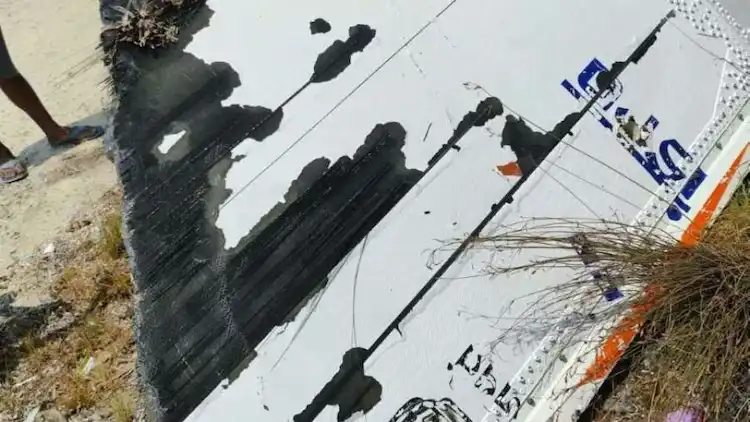
Debris from an Indian Space Research Organisation (ISRO) rocket has washed up on an uninhabited island near Kunahandhoo in Laamu Atoll.
Key details known so far
According to Indian local media reports, debris from a rocket bearing the Indian Space Research Organisation (ISRO) logo has washed ashore.
Indian media reports suggest that the debris is believed to be components from a recently launched rocket. Authorities are currently investigating how these items reached the Maldives and are working to recover the sections of the rocket's "payload fairing."
Media reports indicate that this incident demonstrates how hardware components discarded from Indian space missions can traverse vast oceanic distances and drift across extensive maritime areas.
What was washed ashore? What markings were found on it?
The debris washed ashore consists of white-painted metallic components. Reports confirm that these pieces are part of a "payload fairing," a protective shield used to safeguard satellites during a rocket launch. As a rocket ascends into space, these fairing sections are designed to detach at a specific altitude.
Photos released by the L. Kunahandhoo Island Council and reports from local media outlets show the debris marked with the name "ISRO" in blue, alongside India's national emblem. Additionally, the wreckage bore inscriptions indicating that the rocket was manufactured in 2025.
Constructed from lightweight composite materials, the objects bore visible scorch marks, indicating they had burned upon reentry through the atmosphere.
According to local reports, the markings and dates found on the debris suggest that these are components of a recently launched rocket.
Where did these items wash ashore? What was the path of their drift?
These items were discovered on an uninhabited island near Kunahandhoo in Laamu Atoll, located in the southern region of the Maldives.
The debris was initially discovered within the island's lagoon. Following the discovery, the items were transported to the Kunahandhoo boatyard area.
Based on wind patterns and seasonal ocean currents, it is believed that these debris—which fell into the sea near India's Sriharikota launch site—drifted southwards until reaching the Maldives.
Who discovered these items?
The items were discovered by a middle-aged Maldivian fisherman while out on a fishing trip in a small vessel. Two other individuals were also on board with him at the time.
Kunahandhoo Council President Ibrahim Shakeeb informed the media that the individual brought the items ashore with the intention of dismantling and repurposing components, such as the screws.
However, once the items were brought to the boatyard, local youths identified the markings on them and recognized the debris as parts of a rocket.
According to Shakeeb, the fisherman who discovered the items was initially unaware of their nature. Their identity was only confirmed after several residents of the island inspected and examined the objects.
When were these items discovered?
These items were discovered shortly before February 13, 2026. They were transported to the island's boatyard the night before this report was filed.
Shakeeb told "Mihaaru" that police had completed their inspection of the items by February 13.
Similar debris washed up on the coast of Sri Lanka in late December 2025. Consequently, these are believed to be components detached from launches conducted during the latter part of 2025.
What is the significance of this for India's space endeavors?
ISRO typically utilizes launch vehicles such as the LVM3 and PSLV for its rocket missions. To prevent potential damage to land areas, the rocket's fairing components are jettisoned over designated maritime zones.
While a significant portion of such debris either sinks or is destroyed, some of the more durable fragments drift with the currents and eventually wash ashore. This has raised concerns regarding the potential impact on marine life and the safety of navigation within fishing grounds.
This underscores the growing influence and footprint of India's space program across international waters.
What happens next?
Council President Ibrahim Shakeeb stated that the Maldives National Defence Force (MNDF) has contacted him and confirmed that military personnel will travel to the island to retrieve and analyze the items.
Police have now concluded the initial phase of their investigation. It is understood that ISRO has been notified of these developments through official channels. However, the agency has yet to issue a formal statement on the matter.