Media Commission backtracks after public outcry over social media censorship attempt
26 ޖެނުއަރީ 2026 | ހޯމަ 04:21The commission ordered the public not to circulate a political cartoon from news outlet Adhadhu that was under investigation, but withdrew the notice after widespread criticism from officials and the public who called it an overreach of authority. MJA condemned the move, stating it demonstrates the government's intent to use the Media Control Act to suppress social media expression despite previous assurances otherwise.

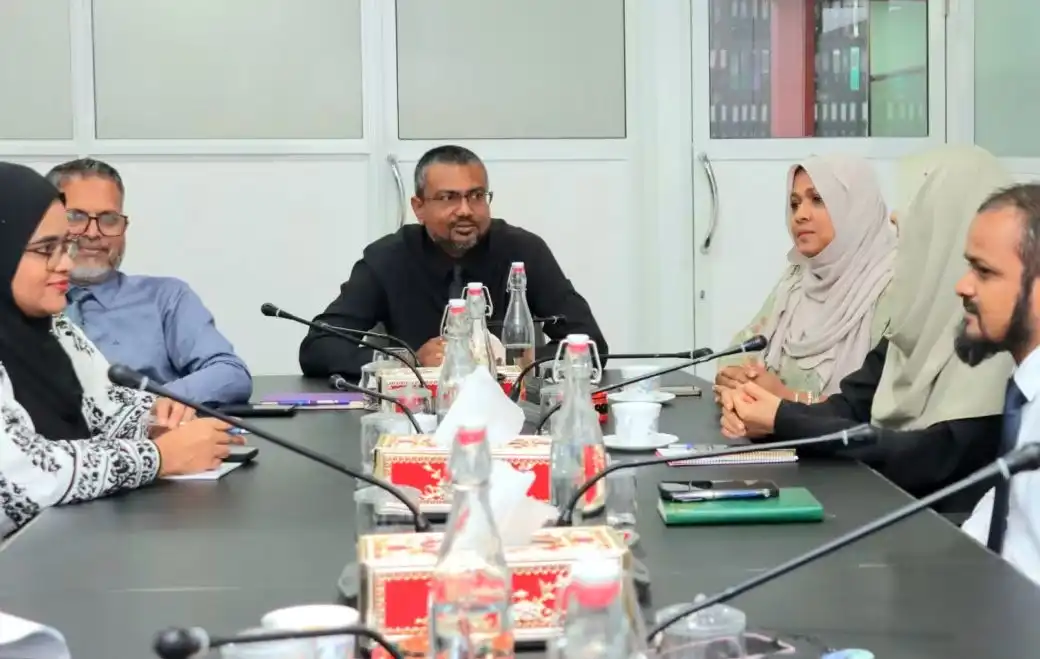
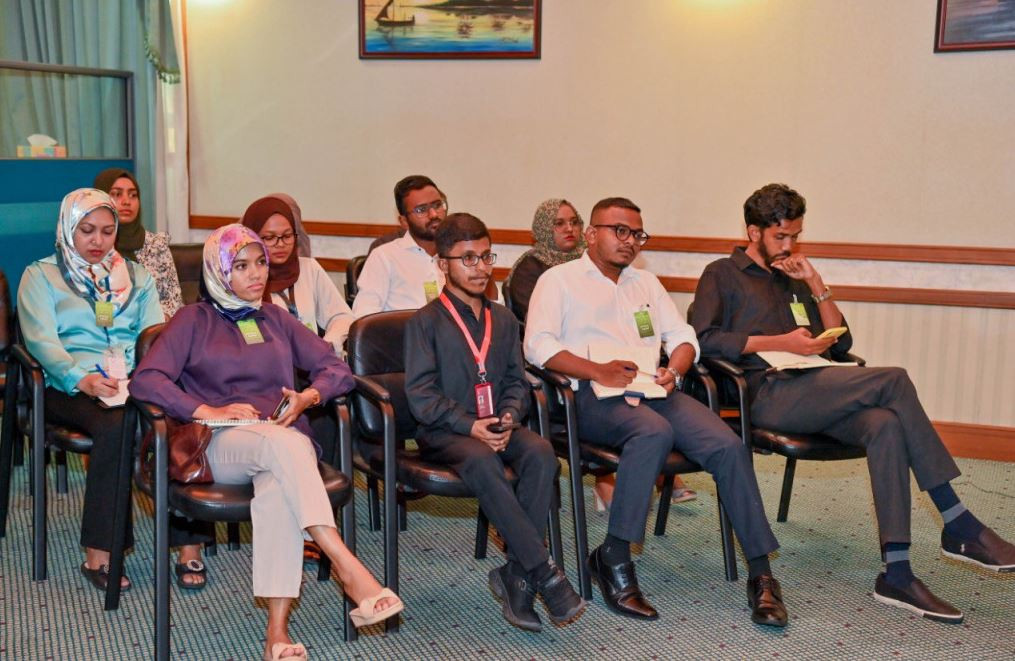
Members of the Media Commission convene | Social Media | social media
The Media and Broadcasting Commission has abruptly withdrawn a public notice following intense criticism over its attempt to regulate content on social media platforms.
The commission’s initial directive ordered the public to refrain from circulating “Political Cartoon” Volume 22, which was published on the Facebook page and ‘X’ account, of the news outlet ‘Adhadhu’. This notice was officially disseminated through the commission’s formal ‘X’ account.
According to the commission, the cartoon, released on January 22, is part of an ongoing investigation. On that basis, the commission issued a blanket ban on its distribution by any individual.
The notice was later deleted and replaced with a revised version. In the updated announcement, the original instruction prohibiting any party from circulating the content was altered to state that no media outlet should distribute it.
The initial directive sparked widespread condemnation from members of the public and political figures, who described it as an unlawful extension of the commission’s legal authority. Among those who publicly criticized the move was Fayyaz Ismail, former Minister of Economic Development and Trade, as well as former Chairperson of the main opposition Maldivian Democratic Party (MDP).
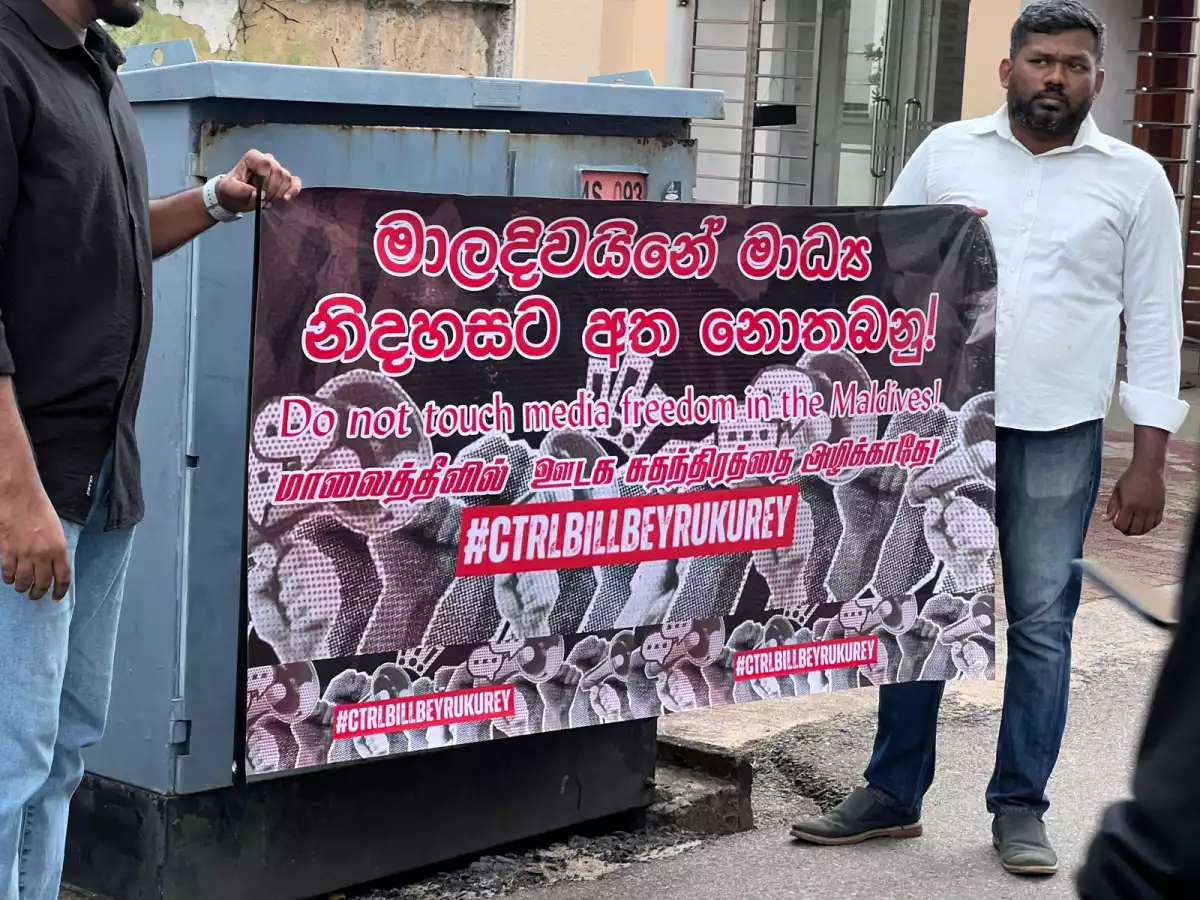
In addition to this, the Maldives Journalist Association (MJA) has raised serious concerns regarding the Media Control Act. The association stated that its principal objection to the legislation lies in the powers granted to the Media Commission, which could be used to penalize and restrict the public’s freedom of expression on social media. Despite these concerns, the government had previously assured the public and international stakeholders that the law contained no such provisions and would not be applied in this manner.
The association further stated that the commission’s initial order, which applied to all citizens and explicitly included social media, demonstrates an intention to use the law to suppress digital discourse.
MJA also alleged that the underlying purpose of the government’s passage of the Act is to restrict freedom of expression and press freedom. It is believed that the commission deleted the original notice and issued a revised version only after facing significant backlash.
The Media Commission informed Adhadhu late on Thursday evening, close to the end of official working hours, that the cartoon was under investigation. In response to this, Adhadhu addressed a formal letter to the commission seeking clarification on the legal basis used to determine that the content contradicts the tenets of Islam.