Human rights groups raise alarm over Muizzu's measures targeting expats
19 ޑިސެމްބަރު 2025 | ހުކުރު 08:29TM and human rights organizations condemned a presidential directive targeting expatriates outdoors between midnight and 6am, calling it discriminatory and unconstitutional. They warned the measure violates fundamental freedoms, could foster animosity and fear, and urged the government to uphold constitutional rights and international human rights standards for all residents.

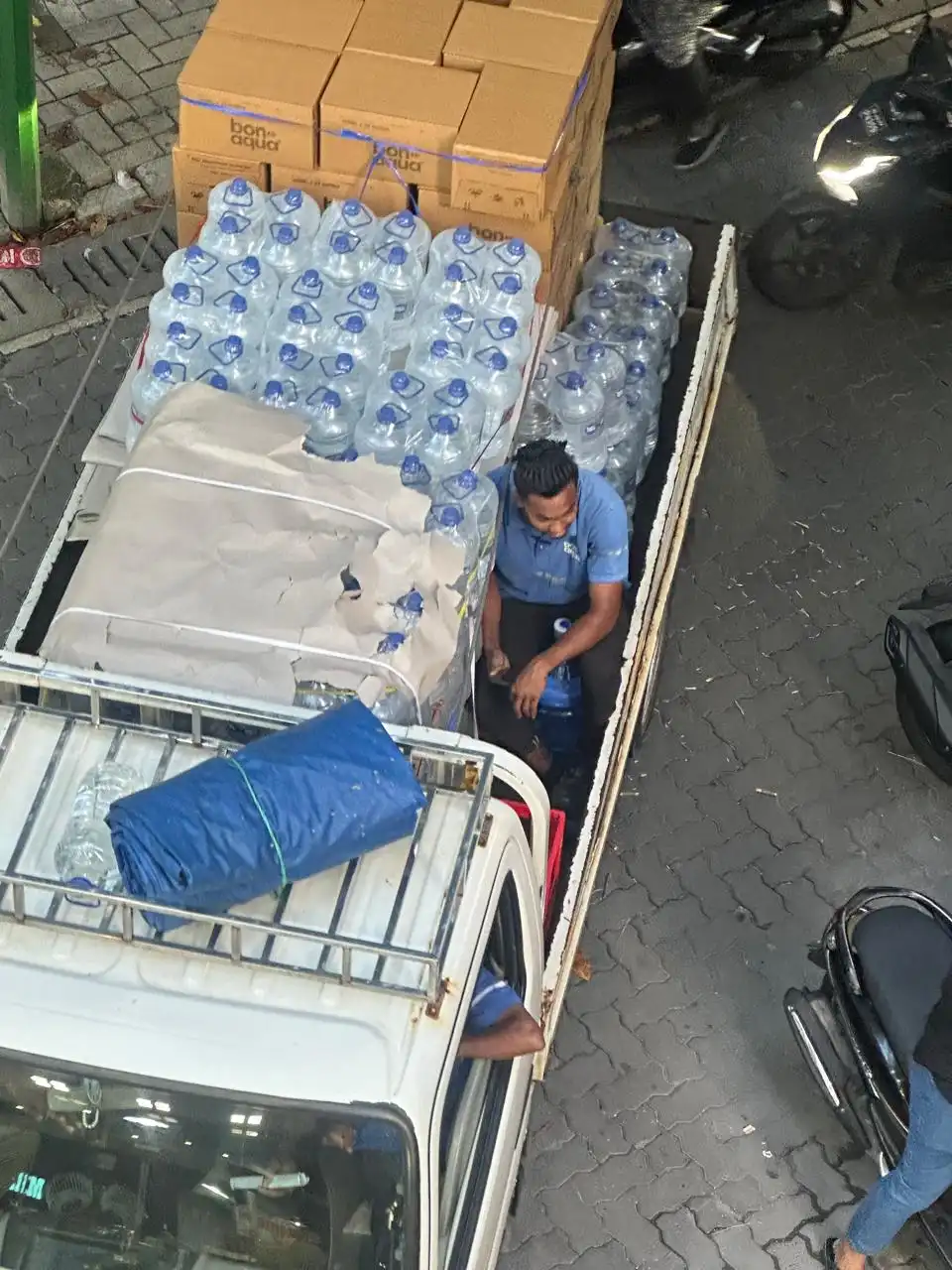
A foreign worker travels on a small truck carrying bottled water
Following President Dr. Mohamed Muizzu's directive instructing the Maldives Police Service (MPS) to stop, question and investigate expatriates found outdoors between 12am and 6am, Transparency Maldives and several other human rights organizations have expressed significant concern.
In a statement, these organizations condemned the measure, calling it discriminatory and raising serious concerns about violations of constitutional and human rights.
The organizations argued that the directive, which specifically targets expatriates, not only infringes upon the fundamental freedom of movement but also constitutes a breach of rights protected by the Maldivian Constitution and international human rights standards.
The statement emphasized that such a measure, singling out a specific group with suspicion, undermines the constitutional guarantee of equality before the law and weakens legal protections for all individuals.
The organizations warned that this approach could foster animosity towards expatriates, creating an environment of fear and division among both expatriates and the general public. It was further noted that these actions could pose a significant threat to the rule of law.
The organizations also pointed out that the Maldivian Constitution ensures equality before the law and explicitly prohibits discrimination.
By targeting expatriates, the government risks violating these constitutional protections. They emphasized that public safety concerns should be addressed based on legal evidence and through targeted measures, rather than policies that unfairly target one group of people.
In addition to this, the statement raised concerns that these measures could lead to increased isolation and fear among expatriates, opening the door to potential exploitation and ridicule. The organizations made it clear that expatriate workers should not be framed as a threat to national security, urging the state to fulfill its responsibility to protect the rights and dignity of all individuals within its jurisdiction.
The organizations concluded by calling on the government to uphold the rights guaranteed by the Constitution and international human rights standards for all individuals residing and working in the Maldives.
They also urged the Human Rights Commission of the Maldives (HRCM) and the Attorney General's Office to assess the legal validity of these government measures, ensure compliance with international human rights obligations, as well as to take necessary steps to safeguard against discrimination and protect human rights.